
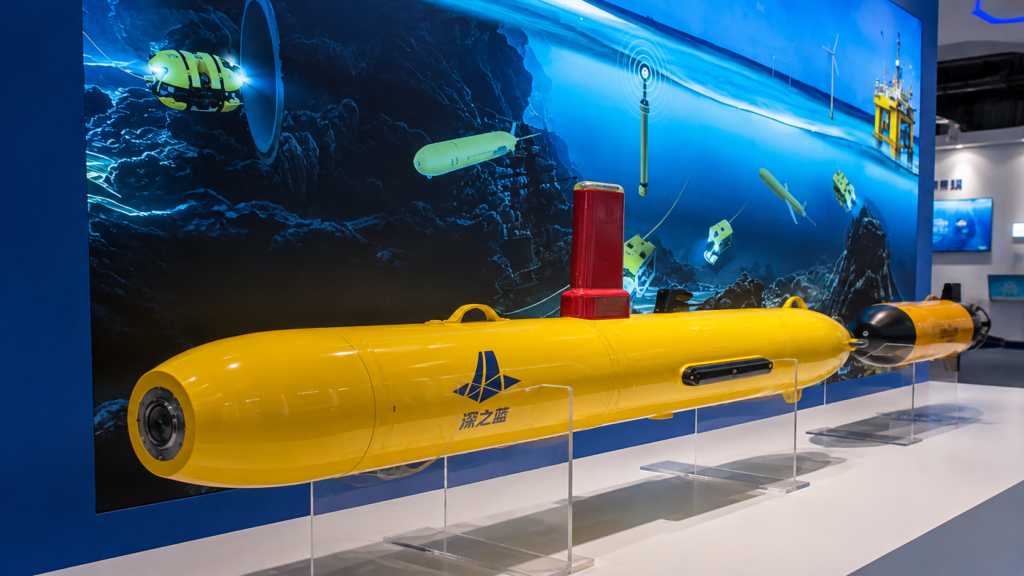
TIANJIN, CHINA — Chinese underwater robotics company Deepinfar says it is open to cooperation with Botswana universities and research institutions to explore how underwater technology could be adapted to the country’s infrastructure, water-management and aquaculture needs.
Deepinfar Brand Director Mr Evan Tian says underwater robots can perform inspection and monitoring tasks in environments that may be difficult, costly or dangerous for people to access.
Speaking during a visit to the company in Tianjin, Mr Tian explained that the technology can be deployed to inspect dams, tunnels, bridges and other underwater infrastructure, helping operators identify damage, blockages and maintenance requirements.
He said similar systems have been used in China on major infrastructure, including water projects and large-scale dam facilities, where underwater inspection is important for safety and maintenance.
For Botswana, the technology could have applications in the management of dams and other water infrastructure, particularly as the country continues investing in water-security projects.
Mr Tian indicated that Deepinfar is willing to engage Botswana universities and research institutions on areas including technical training, information sharing and possible adaptation of the technology to local requirements.
Beyond infrastructure, the company also sees potential applications in aquaculture.
Mr Tian said underwater robots designed for fisheries can monitor water conditions and fish health while reducing the need for workers to undertake potentially risky underwater tasks.
The technology can help fish farmers identify problems earlier, monitor production conditions and potentially reduce losses.
Aquaculture is increasingly being considered across Africa as countries seek additional sources of food production and opportunities for agricultural diversification.
For Botswana, cooperation in underwater robotics could therefore extend beyond infrastructure inspection to research, skills development and food-production technologies.
Mr Tian emphasised that the value of the technology lies in using robotic systems to perform practical tasks while providing operators with information that can support faster decision-making.
The development of underwater robotics also reflects China’s wider expansion into specialised technologies designed for infrastructure management, environmental monitoring and industrial applications.
Potential cooperation with Botswana could provide an opportunity for local researchers and institutions to gain exposure to emerging technologies while exploring how they could be applied to domestic development challenges.