
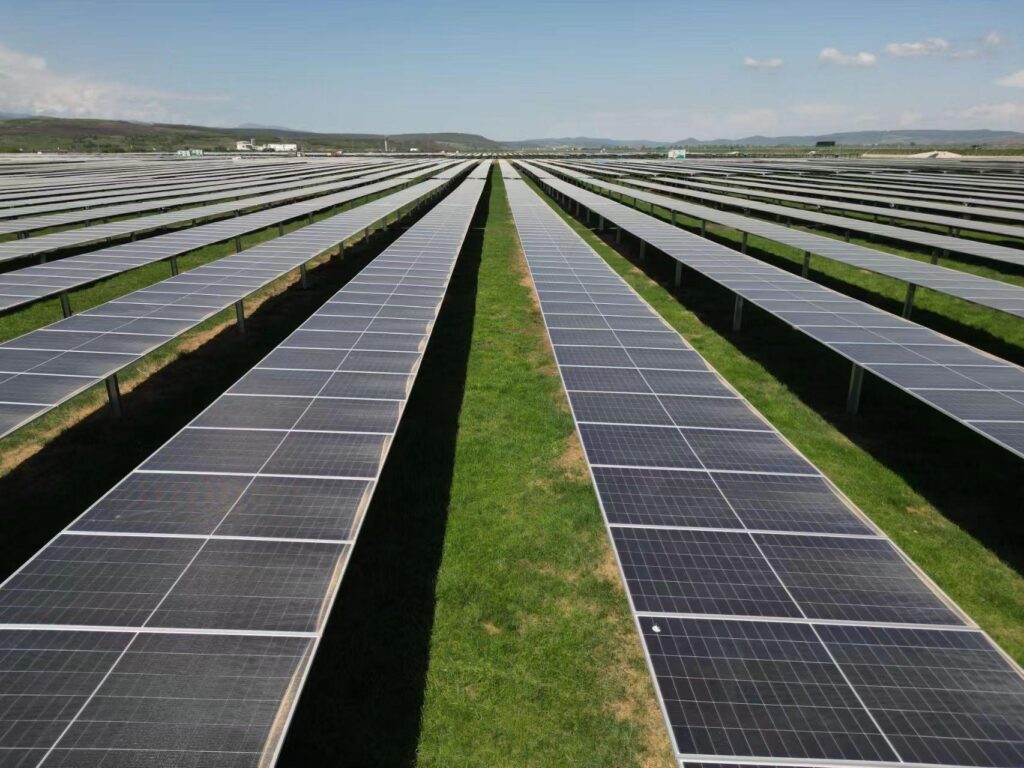
BEIJING, October 19 — Chinese solar technology is helping drive a major expansion of electricity generation across Africa, with the continent projected to install a record 17 gigawatts of solar capacity in 2026 as developing economies accelerate investment in cleaner and more modern energy systems.
The expansion comes amid growing demand for Chinese-made solar panels, electricity-grid equipment and other electrification technologies across Africa, Asia, Latin America and the Middle East.
Analysis released on Monday indicates that developing economies have spent approximately US$235 billion on imported Chinese clean-energy and electrification technologies since the beginning of 2024, highlighting China’s expanding role in the global energy transition.
The figure covers the wider Global South, rather than Africa alone. African solar installations, meanwhile, are projected to reach record levels.
According to research by energy think tank Ember and African Tech Futures Lab, Africa is on course to install 17 gigawatts of solar capacity this year, representing a 45 percent increase over 2025 and a third consecutive annual record.
The researchers estimate that approximately 100,000 solar panels are being installed across the continent every day.
China remains the dominant supplier, accounting for an estimated 94 percent of the solar panels installed in Africa.
The findings suggest that more affordable solar technology is making electricity increasingly accessible to households, businesses and industries seeking alternatives to expensive or unreliable conventional power supplies.
Commenting on the findings in August, Ember Chief Analyst Dave Jones said: “It’s incredible seeing so many businesses and individuals, across so many African countries, choosing to install solar.”
Falling prices are making solar installations increasingly attractive, while official statistics do not yet capture the full scale of the expansion.
The growth is no longer concentrated in a handful of major economies. The research projects that 36 of Africa’s 54 countries will install record amounts of solar capacity in 2026.
Chinese exports of solar panels to Africa reached 23 gigawatts during the 12 months ending June 2026, an increase of 53 percent compared with the preceding 12-month period.
Not all imported panels are installed immediately. Ember’s projections account for the time between importation and installation, making the estimated 17 gigawatts a measure of expected installations rather than total imports.
Beyond solar panels, developing economies are also investing heavily in Chinese electricity-grid equipment, including transformers, switchgear and transmission infrastructure.
Such investments are important because expanding solar generation alone cannot guarantee reliable electricity supplies. Countries must also strengthen transmission networks, improve distribution systems and invest in energy storage.
The rapid expansion of solar power could also strengthen industrial development by providing more reliable and affordable electricity for manufacturing, agricultural processing and digital infrastructure.
Botswana is among the countries expanding solar generation through cooperation with Chinese companies, including the 100-megawatt Jwaneng Solar Power Plant.
The project illustrates how Chinese engineering and energy technology are contributing to efforts to diversify electricity generation and strengthen domestic energy security.
The expansion also presents an industrial opportunity for African economies. While China supplies most of the continent’s installed solar panels, solar manufacturing capacity in Africa is expected to increase, including through new facilities in Egypt and Tanzania.
Researchers estimate that African solar panel production could reach approximately 3.5 gigawatts in 2026, although much of that output is intended for export rather than domestic consumption.
Sustaining this momentum will require greater investment in local manufacturing, technical skills, electricity networks and energy storage to ensure that rising solar installations translate into long-term economic benefits.
As demand for electricity continues to grow, China’s expanding role in supplying solar and grid technologies is positioning the country as an important partner in Africa’s transition towards more diversified and modern energy systems.