
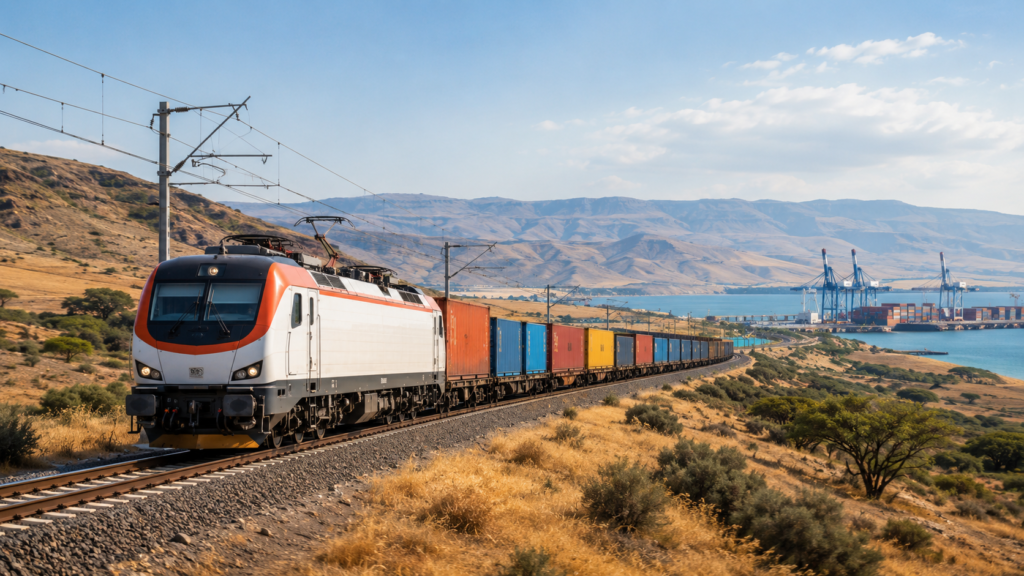
ADDIS ABABA, ETHIOPIA — Ethiopia says the Chinese-built Addis Ababa–Djibouti Railway continues to play an important role in strengthening the country’s trade links and access to international markets.
Chairperson of Ethiopia’s Foreign Relations and Peace Affairs Standing Committee, Dima Negewo, says the railway is among the major infrastructure projects delivered through cooperation between Ethiopia and China.
Speaking during talks with a visiting delegation from China’s National People’s Congress, Mr Dima highlighted the railway as one of Ethiopia’s gains under the Belt and Road Initiative.
The electrified railway connects landlocked Ethiopia with neighbouring Djibouti, providing a direct rail link to port facilities used for much of Ethiopia’s international trade.
The line has helped strengthen the movement of freight between industrial and commercial centres in Ethiopia and the Port of Djibouti.
Mr Dima noted that cooperation between Ethiopia and China has expanded beyond infrastructure to include trade, investment and other areas of economic development.
China has also become an important market for Ethiopian agricultural, mineral and textile products.
The railway was constructed with significant Chinese participation before operational management was transferred to Ethiopia and Djibouti.
Chinese companies continue to provide technical support and expertise as the two countries work to strengthen railway operations and build local technical capacity.
Ethiopian railway officials have indicated that greater local expertise will be important as the country seeks to expand its rail network and improve connections between production centres, logistics facilities and international markets.
The Addis Ababa–Djibouti Railway has become one of the most prominent examples of China-Africa infrastructure cooperation.
For Ethiopia, improved rail connectivity remains important to reducing logistics constraints associated with being landlocked, while Djibouti benefits from its role as a major gateway for regional trade.