
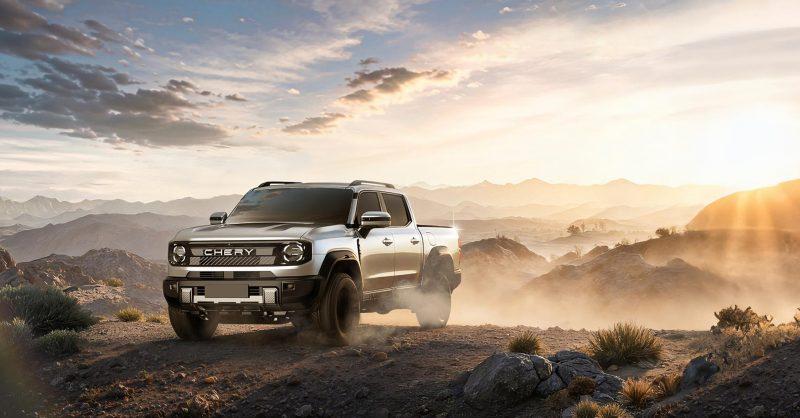
JOHANNESBURG — Chinese automaker Chery has officially named its forthcoming double-cab bakkie Grootman following a public naming campaign that attracted more than 20,000 submissions in South Africa.
The announcement marks another step in the company’s expansion into the Southern African automotive market, with the new vehicle scheduled to reach South African showrooms during the first quarter of 2027.
Previously known as the KP31, the vehicle will become Chery’s first bakkie in South Africa, introducing the Chinese manufacturer into a segment traditionally dominated by established pickup brands.
The naming campaign invited South African motorists to participate in shaping the vehicle’s regional identity.
Six names reached the final stage, including Bakkie, Brahman, Chief, Grootman, Nduna and Orca, before Grootman emerged as the preferred choice.
Chery South Africa General Manager Jay Jay Botes said the company wanted local consumers to participate in developing the vehicle’s identity while combining Chinese engineering expertise with South African market preferences.
The Grootman will feature a plug-in hybrid powertrain combining a 2.5-litre turbocharged diesel engine with electric propulsion and four-wheel drive.
According to specifications released ahead of its launch, the vehicle will produce a combined 350 kilowatts of power and 800 newton-metres of torque.
Chery has also indicated an electric-only driving range of up to 100 kilometres under the NEDC testing cycle, with a towing capacity of up to 3,500 kilograms.
The introduction of a diesel-electric hybrid bakkie reflects growing competition among Chinese automotive manufacturers as they expand their product offerings across international markets.
In Southern Africa, where double-cab vehicles are widely used in agriculture, construction, tourism and commercial transport, the model introduces another alternative in the utility vehicle segment.
Final pricing and model specifications will be announced closer to the launch.
The development also highlights the increasing importance of localisation as Chinese automotive brands seek to strengthen their presence in African consumer markets.