
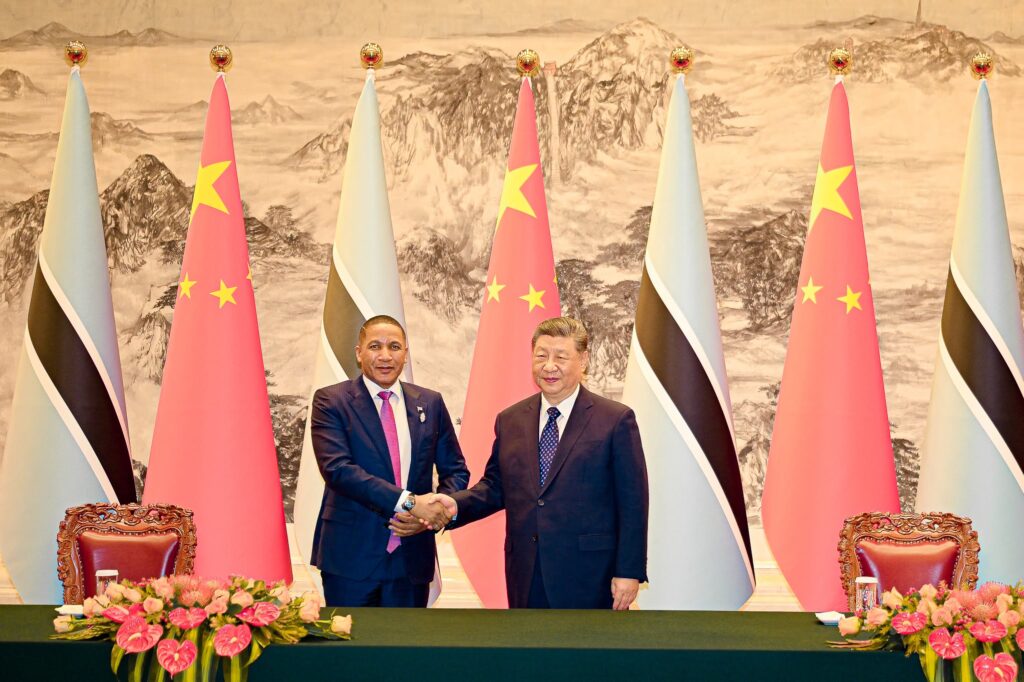
BEIJING, October 18 — Botswana is positioning its beef, citrus and other agricultural products for expanded access to China’s consumer market following new trade commitments reached during President Duma Gideon Boko’s state visit to Beijing.
The two countries have agreed to strengthen agricultural trade, address export barriers and expand investment cooperation under their newly established Comprehensive Strategic Cooperative Partnership.
In a joint statement issued following talks between Boko and Chinese President Xi Jinping on October 13, both governments committed to improving market access for Botswana’s agricultural products through China’s zero-tariff measures and the Green Channel 2.0 trade facilitation mechanism.
The commitments come as Botswana seeks to diversify its diamond-dependent economy and develop new sources of export revenue.
Speaking ahead of his visit, Boko welcomed China’s decision to extend zero-tariff treatment to African countries with diplomatic relations with Beijing, describing the initiative as “a very welcome and laudable step by the Chinese government.”
He said the policy had opened access to “what is a 1.4 billion market in terms of consumer base to African products.”
Boko also highlighted the importance of securing market access for Botswana’s citrus industry.
“But more importantly, with regard to Botswana, we will be concluding agreements that will enable our citrus produce to enter China under the no-tariff arrangement, which is massive as a benefit to our country,” he said.
The latest commitments build on earlier progress in agricultural trade negotiations between Gaborone and Beijing.
Botswana’s Minister for State President, Defence and Security, Moeti Mohwasa, previously confirmed that a beef export protocol had been signed, while negotiations on a citrus protocol were approaching completion.
“Not only will this allow us to export our world renowned high quality beef to the Chinese market, but it will also serve to expand the market for more of our products,” Mohwasa said at a reception marking China’s 77th National Day in Gaborone.
The growing commercial relationship is already reflected in bilateral trade figures.
According to Chinese Ambassador to Botswana Fan Yong, trade between the two countries reached US$852 million during the first half of 2026, representing a 58.6 percent increase compared with the corresponding period in 2025.
“Almost all Botswana’s products entering China are eligible for duty free treatment,” Fan said.
China’s zero-tariff policy could strengthen the competitiveness of Botswana’s agricultural exports, although producers must still satisfy Chinese sanitary, phytosanitary and other regulatory requirements before accessing the market.
The Botswana–China joint statement specifically commits both governments to expanding market opportunities for beef, citrus and other agricultural products while addressing technical and market-access barriers.
Beyond agricultural exports, the two countries have agreed to encourage commercially viable investment in manufacturing, mining, energy, infrastructure, logistics and digital technology.
For Botswana, these commitments offer an opportunity to move beyond exporting raw commodities towards developing processing industries, strengthening local value chains and creating employment.
President Boko has made industrialisation a central ambition of his engagement with China, expressing interest in partnering with Chinese companies that have invested heavily in research, development and mineral beneficiation.
He said such cooperation could “enable Botswana to become a manufacturer and, therefore, serve the Chinese market even better.”
The two governments also agreed to accelerate work on trade arrangements under the Economic Partnership for Common Development Agreement within the Southern African Customs Union framework.
While the diplomatic and trade commitments mark a significant expansion of bilateral cooperation, their economic impact will depend on the conclusion of outstanding market-access arrangements, investment decisions and the ability of Botswana’s producers to meet Chinese demand.
For Botswana’s agricultural sector, the immediate priority will be turning improved market access into actual export contracts, increased production and sustainable earnings.