
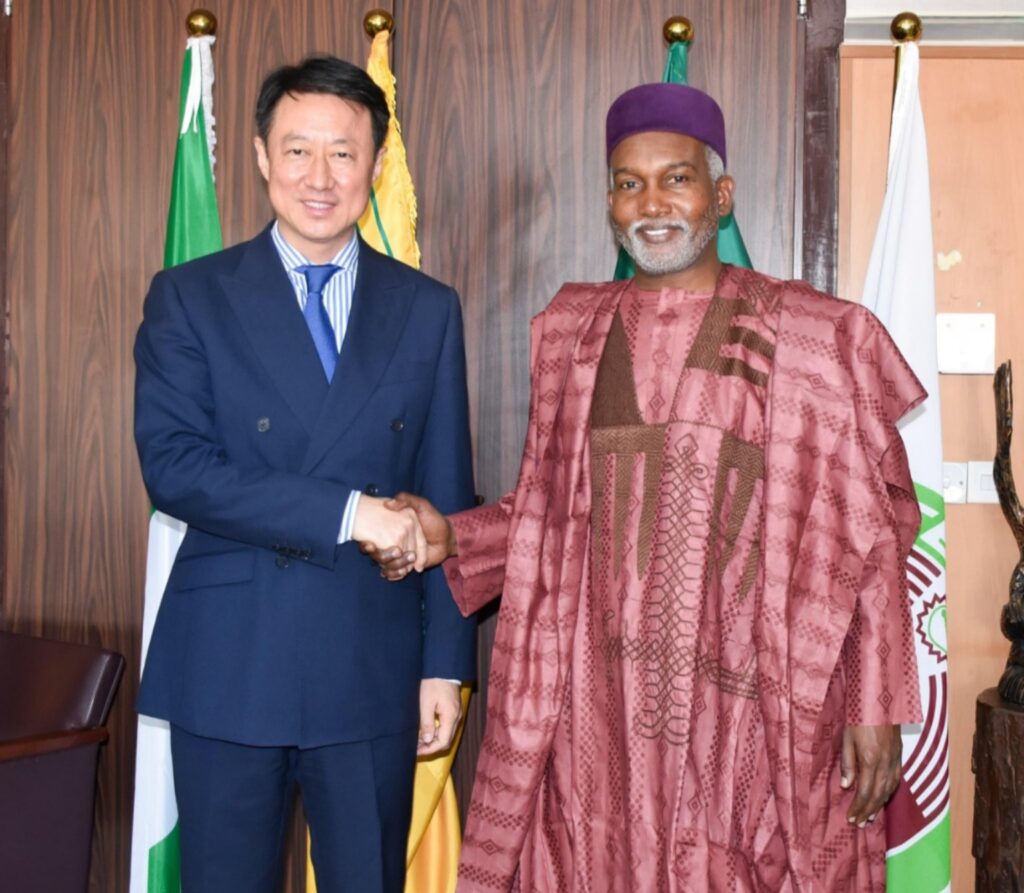
ABUJA, Sept. 23 — China has invited Nigeria to join a new global artificial intelligence cooperation organisation as the two countries move to deepen economic ties beyond traditional trade and infrastructure into technology, industrialisation and emerging industries.
Chinese Ambassador to Nigeria Yu Dunhai announced the invitation in Abuja during a reception marking the 77th anniversary of the founding of the People’s Republic of China.
The development comes as economic ties between Africa’s most populous country and China continue to expand. Bilateral trade reached $18 billion in the first half of 2026, an increase of 35 percent, while Chinese imports from Nigeria rose by 81 percent during the same period.
Yu invited Nigeria to join the World Artificial Intelligence Cooperation Organization, an intergovernmental body established in Shanghai to promote international cooperation and governance in artificial intelligence.
The organisation was formally established in July, with representatives from 29 countries signing its founding agreement. It is headquartered in Shanghai and seeks to promote cooperation around the development, governance and responsible application of artificial intelligence.
Nigeria’s participation could add a new dimension to a bilateral relationship that has traditionally been dominated by trade, infrastructure, energy and construction.
Yu said China is ready to align its 15th Five-Year Plan with Nigeria’s development priorities, particularly in industrialisation, digital development and the green and blue economies.
Artificial intelligence, digital payments and renewable energy are among emerging areas where China and African countries are seeking greater cooperation.
The technology push comes alongside rapidly expanding trade.
China’s zero-tariff treatment for 53 African countries, introduced on May 1, has widened access to the Chinese market for African products. Chinese imports from Africa increased by 24 percent in May and June, according to figures cited by Yu.
Nigeria has recorded particularly strong growth, with Chinese imports from the West African country rising sharply during the first half of the year.
Recent agreements covering economic cooperation and the export of Nigerian aquatic products to China are also expected to support efforts to diversify the country’s exports.
Nigeria welcomed the expanding trade relationship but stressed the importance of translating greater market access into domestic production.
Joseph Tegbe, Minister of Power and Director-General of the Nigeria-China Comprehensive Strategic Partnership, said China’s zero-tariff programme presents opportunities for Nigerian producers to expand exports.
He also identified reliable electricity, renewable energy and the local manufacture of power equipment as important areas for deeper cooperation with China.
Chinese financing, investment and engineering have already played a significant role in major Nigerian infrastructure projects, including the Lekki Deep Sea Port, railway modernisation and the Zungeru Hydroelectric Power Station.
The latest discussions suggest that cooperation is increasingly moving into sectors associated with the next phase of economic development, including artificial intelligence, digital technologies, renewable energy and advanced manufacturing.
The two countries are marking 55 years of diplomatic relations in 2026.
Alongside trade and technology, people-to-people exchanges are also expanding. China has announced Chinese-language broadcasts on the Federal Radio Corporation of Nigeria and Voice of Nigeria as part of efforts to strengthen cultural understanding.
With bilateral trade growing and cooperation extending into artificial intelligence and industrial development, the China-Nigeria relationship is increasingly combining traditional infrastructure and commerce with technology, manufacturing and new forms of economic cooperation.