
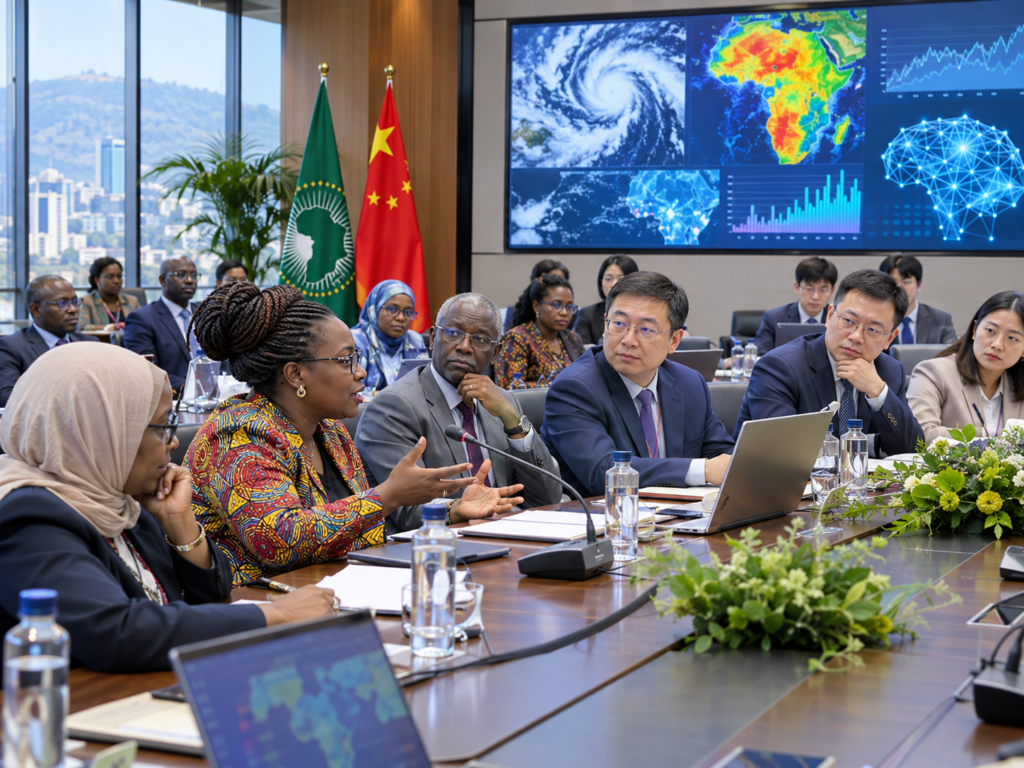
ADDIS ABABA, Nov. 24 — China and the African Union have intensified cooperation on artificial intelligence, satellite technology and climate forecasting as African countries prepare for potentially severe weather conditions associated with the 2026–2027 El Niño phenomenon.
Officials from China and the African Union Commission opened a training workshop in Addis Ababa on Monday, bringing together climate and disaster management experts to explore modern technologies capable of improving early warning systems across the continent.
The workshop focuses on the application of artificial intelligence, geographic information systems, satellite data and scientific monitoring to strengthen preparedness for droughts, floods and other climate-related disasters.
African Union Commissioner for Agriculture, Rural Development, Blue Economy and Sustainable Environment Moses Vilakati warned that intensifying El Niño conditions could create serious threats to food security and livelihoods.
Vilakati said the weather phenomenon threatened to expose as many as 50 million people to hunger, underscoring the need for stronger climate monitoring and disaster preparedness.
He highlighted the importance of combining modern technologies with improved scientific cooperation to enable governments to identify climate-related threats and take preventive action before disasters occur.
The commissioner said artificial intelligence, machine learning and satellite observations could improve the ability of African institutions to forecast extreme weather and identify communities facing heightened risks.
Zhang Wei, deputy head of the Chinese Mission to the African Union, said African countries needed to strengthen their capacity to monitor and respond to natural disasters.
He noted that only about 40 percent of African countries had established multi-hazard early warning systems, leaving significant gaps in the continent’s disaster preparedness.
Zhang said China would continue supporting African partners through cooperation in meteorological monitoring, scientific research, emergency management, technological innovation and professional training.
The cooperation also includes plans to establish 30 joint laboratories and an Africa-China satellite remote sensing application cooperation centre.
These initiatives are intended to strengthen Africa’s scientific capabilities and support sustainable development through research and the practical application of modern technologies.
The training workshop is jointly organised by the African Union Commission, the Chinese Mission to the African Union and the Alliance of National and International Science Organizations for the Belt and Road Regions.
It is scheduled to continue until Friday, providing opportunities for technical training, practical exercises and the exchange of experiences among participating experts.
Climate-related disasters continue to pose significant challenges to African economies, particularly in agriculture, water management and rural livelihoods.
For southern African countries, including Botswana, where droughts can threaten agricultural production, livestock and water availability, improvements in early warning technology are particularly relevant.
Timely information about seasonal conditions can help governments and communities plan agricultural activities, manage water resources and prepare emergency responses.
The China-Africa initiative reflects a growing emphasis on using scientific cooperation and emerging technologies to address development challenges.
Participants hope that stronger technical partnerships will improve Africa’s ability to anticipate extreme weather events and reduce their economic and social consequences.