
GABORONE, Nov. 18 — The Industrial and Commercial Bank of China (ICBC) and Standard Bank have been exploring a financing arrangement that could allow the Botswana government to raise funds from investors in China’s domestic bond market, potentially opening another source of development financing.
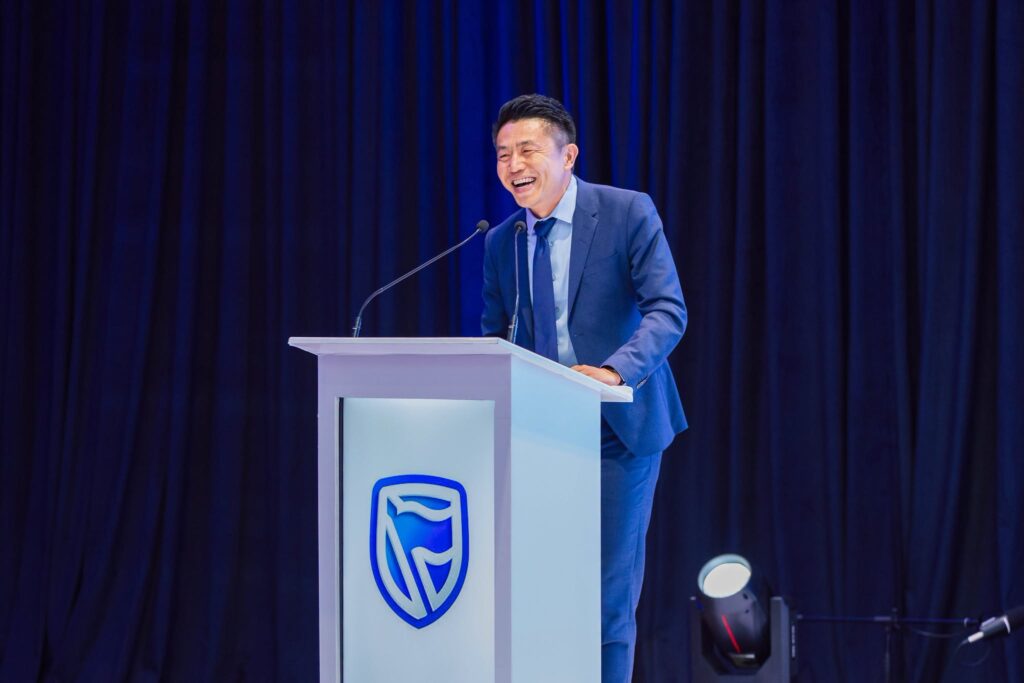
Jia (Jason) Liu, Deputy Chief Executive Officer of ICBC Africa, disclosed the initiative during the official launch of Stanbic Bank Botswana’s access to China’s Cross-Border Interbank Payment System (CIPS) in Gaborone on Tuesday.
Liu said the two banking groups had spent the past two years promoting and exploring a potential Panda Bond issuance for Botswana, with the aim of helping the country access China’s comparatively low-interest-rate financing market.
He said the institutions remained committed to advancing the proposal, expressing confidence that greater access to Chinese capital could benefit Botswana’s economic development.
However, the initiative remains exploratory. Liu did not announce a confirmed bond issue, financing amount, interest rate or timetable, and no final borrowing agreement was disclosed.
What Panda Bonds could mean for Botswana
Panda Bonds are bonds issued by foreign governments, companies or financial institutions in mainland China’s domestic market and denominated in the Chinese currency, the renminbi, also known as the yuan. Bank of China explains the instrument and its financing uses.
In practical terms, an issuance would enable Botswana to borrow directly from investors in China by selling yuan-denominated debt securities. The government would receive the bond proceeds and undertake to repay investors, with interest, under agreed terms.
Such an arrangement could diversify Botswana’s borrowing options beyond existing domestic and international sources of finance. Any actual savings, however, would depend on the bond’s pricing, fees, maturity and exchange-rate movements. Because repayments would be denominated in yuan, changes in the pula-yuan exchange rate could also affect the cost of servicing the debt.
Liu did not specify how Botswana might use the funds if a bond were eventually issued. Any transaction would require further decisions and the applicable regulatory and market approvals.
Banking partnership and new payments link
ICBC’s cooperation with Standard Bank dates back to 2008, when the Chinese banking group acquired a 20-percent stake in Standard Bank for approximately US$5 billion.
According to Liu, the partnership has since helped finance more than 130 projects across Africa, with combined loans totalling US$28 billion over 18 years. He said the two banks had also jointly financed energy projects in Botswana.
His remarks came as Stanbic Bank Botswana launched a service giving eligible customers access to renminbi cross-border payments through the wider Standard Bank network and China’s CIPS infrastructure.
Unlike Panda Bonds, which are a borrowing instrument, CIPS is a payment and settlement system. It offers businesses a channel for making and receiving eligible payments in yuan when trading with Chinese partners.
Liu encouraged Botswana importers and exporters to consider settling transactions directly in renminbi rather than automatically routing payments through the US dollar. He said direct yuan settlement could eliminate an intermediate currency conversion and reduce transaction costs, depending on the banking arrangements involved.
He also urged Botswana exporters to examine opportunities under China’s zero-tariff trade policy for eligible African products, saying the country should identify sectors that could become more competitive in the Chinese market.
The proposed Panda Bond financing and the launch of yuan payment services represent separate but potentially complementary efforts to strengthen Botswana-China financial links, as Botswana seeks new capital sources and export opportunities to support economic diversification.