
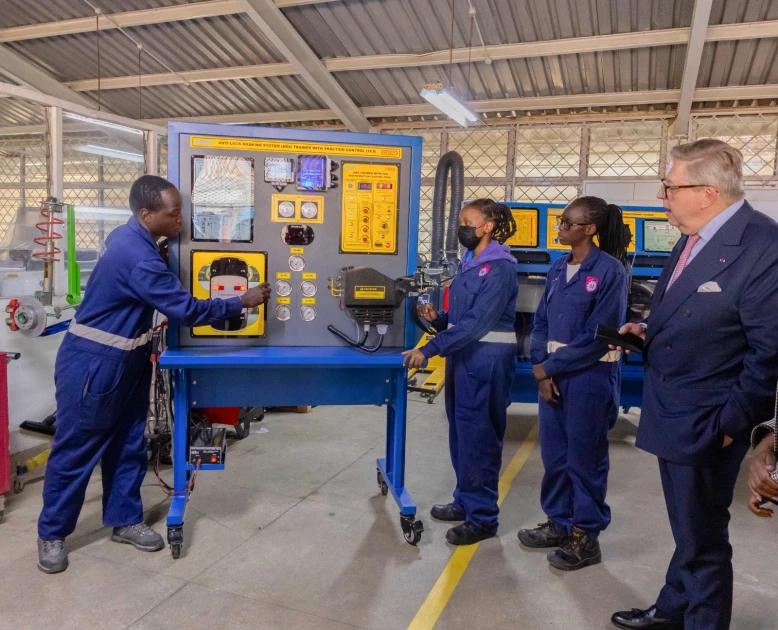
Kenya is exploring a fourth phase of technical and vocational education cooperation with China as it seeks to train more workers for manufacturing and other emerging industries, Education Cabinet Secretary Julius Migos Ogamba has said.
In an interview reported by Xinhua on Tuesday, October 13, Ogamba said Chinese-supported equipment and technical training had helped Kenya strengthen its Technical and Vocational Education and Training (TVET) institutions, bringing industrial technology closer to students and instructors.
The partnership has moved beyond the supply of machines. According to Ogamba, Chinese specialists provide training in operating the equipment, while selected institutions have developed model centres linking practical instruction with production and innovation.
He said Kenya wants to build on three existing phases of cooperation and has discussed a possible fourth phase that would expand coverage and improve consistency in the equipment available to training institutions.
The discussions have not yet been announced as a concluded agreement.
Kenya’s push to widen the programme comes as industrialisation and job creation become central to its economic plans. Ogamba said technical education must respond to the needs of employers, especially as artificial intelligence and other technologies change the skills demanded in the labour market.
Equipment can become outdated quickly, making affordable upgrades and partnerships with countries such as China important, he said. He also called for a shift in public attitudes towards vocational education, which is sometimes regarded as a fallback for students who do not enter university.
The wider China-Kenya partnership is already supporting technical institutions. Speaking separately at the 2026 Legislators Forum for Friendly Exchanges in China, National Assembly Speaker Moses Wetang’ula said 144 Kenyan vocational institutions had received modern equipment and 314 trainers had undergone training under the cooperation.
Wetang’ula also urged stronger collaboration in manufacturing and technology transfer, arguing that economic ties should create more opportunities for domestic industry and young workers.
The next stage of the partnership will be measured by more than the number of institutions equipped. Its economic value will depend on whether graduates acquire skills that employers need, businesses increase production and trained technicians can maintain and adapt modern technologies.
As Kenya pursues a more diversified economy, closer links between Chinese industrial expertise and Kenyan vocational education could help provide the workforce needed to turn investment into sustained employment.
Sources: Xinhua; People Daily Kenya.