
By Moutlakgola Masire
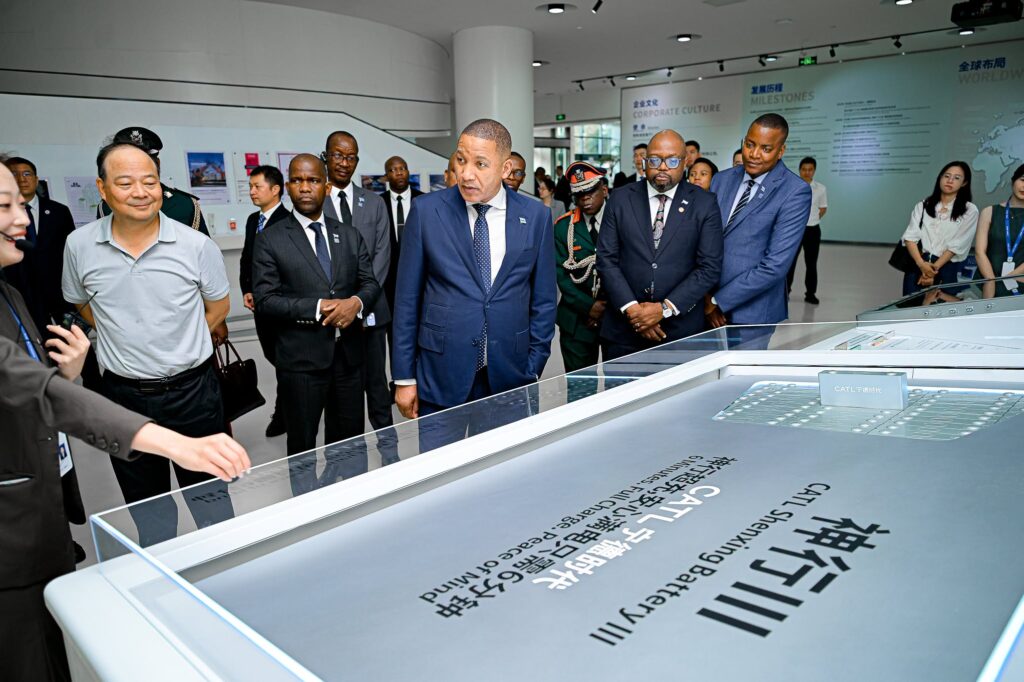
President Duma Boko’s visit to Chinese battery manufacturer CATL in Fujian Province marks an important moment in his state visit to China. Beyond the diplomatic engagements, the visit offers a closer look at how industrial innovation, investment and long-term planning can transform an economy.
CATL is one of the world’s leading manufacturers of batteries used in electric vehicles and energy storage systems. Its growth reflects China’s remarkable progress in developing industries built around research, advanced manufacturing and technological innovation.
For a country seeking to diversify its economy beyond diamonds, this experience carries particular significance.
What caught my attention about Boko’s visit is not simply the prominence of CATL in the global battery industry, but the wider industrial ecosystem that has supported its development.
China’s experience demonstrates that industrial transformation requires more than attracting investors. It involves sustained investment in research, technical skills, infrastructure, manufacturing capacity and the development of competitive supply chains.
CATL’s own financial results illustrate that commitment. The company reported research and development expenditure of RMB22.1 billion in 2025, reflecting the scale of resources being directed towards maintaining its technological competitiveness.
Botswana can draw valuable lessons from this approach as it seeks to develop new industries and expand domestic production.
The country’s renewable energy ambitions provide one potential area of cooperation. The China-built 100-megawatt Jwaneng solar power plant has already demonstrated the practical contribution Chinese engineering companies can make to Botswana’s energy development.
Battery storage technology could complement such investments by helping manage the intermittent nature of solar generation and improving electricity supply reliability.
Beyond energy generation, potential cooperation could extend to technical training, equipment maintenance, battery-related services and, where commercially viable, local assembly and manufacturing.
These possibilities are especially relevant to Botswana’s ambition to move beyond exporting raw materials towards producing higher-value goods.
The visit also highlights the importance of long-term development planning.
During his engagements in Fujian, Boko drew attention to Fuzhou’s 3820 Strategic Project, introduced in 1992 under the leadership of Xi Jinping when he served as the city’s Party secretary.
The strategy established development goals over three, eight and twenty years, illustrating how a consistent industrial vision can guide economic transformation across different stages.
This is perhaps one of the most valuable lessons emerging from the visit: economic diversification requires continuity between national planning, investment promotion, industrial development and implementation.
After 51 years of diplomatic relations, Botswana and China have an established foundation for expanding cooperation into more technologically advanced industries.
Boko’s engagements in Fujian provide an opportunity to deepen that relationship through industrial partnerships, skills development and new forms of investment.
No investment agreement with CATL has yet been announced, and the commercial feasibility of potential projects would need to be established. Nevertheless, the visit creates an important opening for further engagement.
The next step should be identifying practical areas where Chinese technological expertise can meet Botswana’s industrial priorities and produce measurable economic benefits.
China’s development experience offers more than an example of industrial success. It provides an opportunity to explore how international cooperation, innovation and sustained investment can help shape the next stage of Botswana’s economic transformation.
The lasting significance of Boko’s visit will depend on how effectively these opportunities are translated into productive industries, skilled employment and enduring commercial partnerships.