
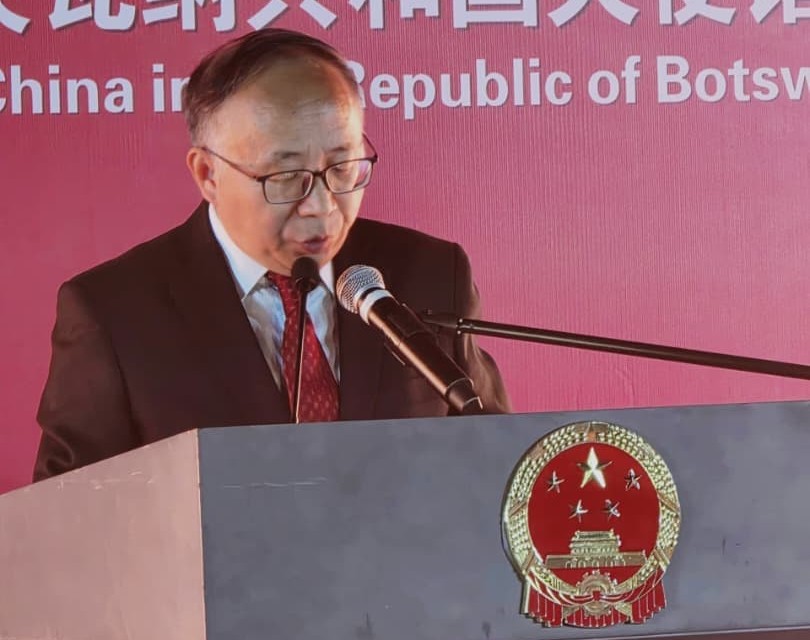
GABORONE — Chinese Ambassador to Botswana Fan Yong says the 100-megawatt Jwaneng Solar Power Plant has officially commenced operations, helping to ease Botswana’s electricity shortage and strengthen the country’s energy security.
Speaking during a reception marking the 77th anniversary of the founding of the People’s Republic of China, Fan highlighted the project as one of the achievements of growing bilateral cooperation between Botswana and China.
Constructed by China Harbour Engineering Company (CHEC), the facility was connected to the national electricity grid in April 2026, marking an important step in Botswana’s efforts to diversify its energy mix and reduce dependence on imported electricity.
The plant is expected to generate approximately 270 million kilowatt-hours of electricity annually, potentially reducing electricity import requirements and associated expenditure.
For his part, Jwaneng–Mabutsane Member of Parliament Omphemetse Kwapa said the development presents opportunities beyond electricity generation, particularly in employment, skills development and industrial growth within the constituency.
Kwapa highlighted the importance of reliable electricity supply to Jwaneng Mine, whose operations require power around the clock.
Although the direct impact of the solar plant on electricity availability at constituency level is not yet distinguishable, he expressed optimism about its contribution to Botswana’s long-term energy needs.
He further highlighted opportunities that improved electricity generation could create for manufacturing, agriculture and other economic activities, while emphasising the importance of ensuring that surrounding communities benefit from major infrastructure investments.
Meanwhile, Kgomotso Mokopanyi, who worked in the Screw Section during construction of the Jwaneng Solar Power Plant, highlighted the importance of skills transfer through the project, particularly the opportunity for local workers to gain practical experience in solar technology and develop technical skills that could open doors to future employment in the renewable energy sector.
The project also provided training opportunities for 20 electrical engineering graduates from Jwaneng Technical College, exposing them to photovoltaic technology, construction, technical management and equipment operations.
The development demonstrates how Botswana–China renewable energy cooperation can extend beyond infrastructure delivery to support local workforce development and strengthen domestic technical capacity.
With the Jwaneng facility now operational, the project represents an important contribution to Botswana’s pursuit of greater energy self-sufficiency, while creating opportunities for employment, industrial development and skills transfer in the country’s growing renewable energy sector.