
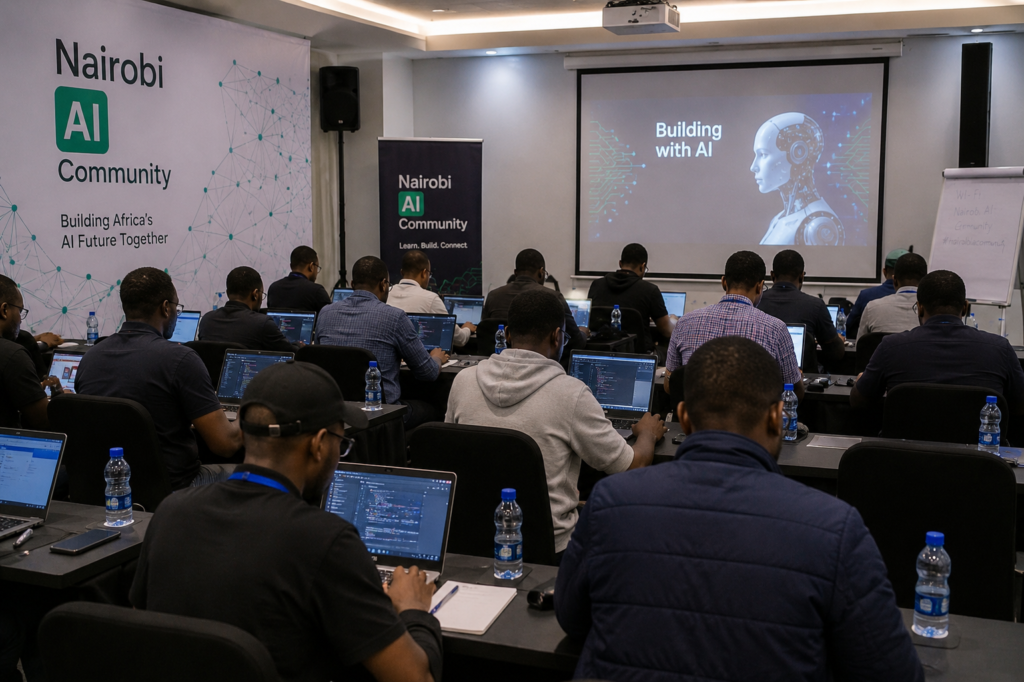
NAIROBI, Kenya — Chinese artificial intelligence models are gaining ground among Kenyan developers and technology companies as lower costs, strong performance and greater flexibility make them increasingly attractive for locally developed applications.
According to news reports, models such as DeepSeek and Qwen are being used in areas ranging from legal technology and business intelligence to document processing and coding.
Kenyan AI entrepreneur Michael Michie said Chinese models have become widely used across projects at his company, with clients increasingly choosing them because of their cost and computing efficiency.
That is particularly important in Kenya, where access to high-performance graphics processing units remains limited. Models that require fewer computing resources can therefore be easier and cheaper for local developers to deploy.
The growing use of Chinese models also reflects the importance of open-weight technology, which allows developers to adapt existing AI systems for specific industries, languages and local requirements rather than building models from scratch.
Kenyan technology companies are already experimenting with this flexibility. Document-processing platform JibuDocs uses a Chinese AI model to process large volumes of documents, extract information and generate summaries, while technology company Qhala has been experimenting with DeepSeek and exploring how similar technology could support models designed for African languages and content.
The trend points to an emerging dimension of China-Africa technology relations. Chinese involvement in Africa’s digital development has traditionally been associated with telecommunications infrastructure, devices and connectivity, but artificial intelligence is creating new opportunities for cooperation in software, computing and locally developed digital services.
Chinese AI models could also have applications in areas including healthcare, disaster preparedness and early-warning systems, provided local data governance and other safeguards are addressed.
Kenya is also among the founding members of the World Artificial Intelligence Cooperation Organization established in Shanghai in July 2026, adding another channel through which the country could deepen engagement with China on AI development and governance.
As African developers search for affordable ways to build AI applications suited to local conditions, the growing use of Chinese models in Kenya could offer an early indication of how China-Africa technology cooperation is evolving beyond physical digital infrastructure and into the rapidly expanding AI economy.